
🚨https://daytradetowin.com
Free Member Access: https://daytradetowin.com/free/
🚀 Ninja Trader free Access: https://ninja.daytradetowin.com/
🚀Trading View Access: https://pxl.to/tradingview
Email: [email protected] OR call 1-888-607-0008
Lifetime Access: https://daytradetowin.com/day-trading-mentorship-coach/
New PDT Stock trading rule: https://daytradetowin.com/pattern-day-trader-rule/
Email: [email protected] OR call 1-888-607-0008
Chapters
0:00 Intro and Market Outlook
2:45 Identifying Support and Resistance Levels
5:15 Market Scenarios and the Santa Claus Rally
8:30 Understanding Trending vs Range Bound Cycles
11:15 The ABC Intraday Trading Strategy
14:45 Rules for Entry and the Two Candle Rule
18:15 Analyzing Late Day Rallies and Sell Offs
21:00 Real Chart Examples and ABC Indicator
23:45 Adapting Strategies for Different Markets
How do you know if the market is about to trend, reverse, or trap traders in a sideways range? In this FREE day trading masterclass, John Paul from DayTradeToWin teaches a practical price action strategy for identifying trading opportunities in futures, stocks, and other markets.
✅ Get the FREE ABC Trading Indicator:
In this full trading class, you’ll learn how to read market direction, identify support and resistance, recognize trend days versus range-bound days, and use two consecutive candle closes to confirm potential breakouts.
WHAT YOU’LL LEARN:
✅ How to anticipate trending and sideways markets
✅ The ABC trading strategy explained step by step
✅ Why the first 2½ hours of trading are so important
✅ How to identify support and resistance using price action
✅ The two-candle confirmation rule for potential trade entries
✅ How to recognize false breakouts and market reversals
✅ How to spot possible late-day rallies and selloffs
✅ October–December 2026 stock market outlook
✅ Why the S&P 500, Nasdaq, Dow, and Russell can behave in similar ways
✅ How to adapt these concepts to NinjaTrader and TradingView
THE ABC PRICE ACTION METHOD
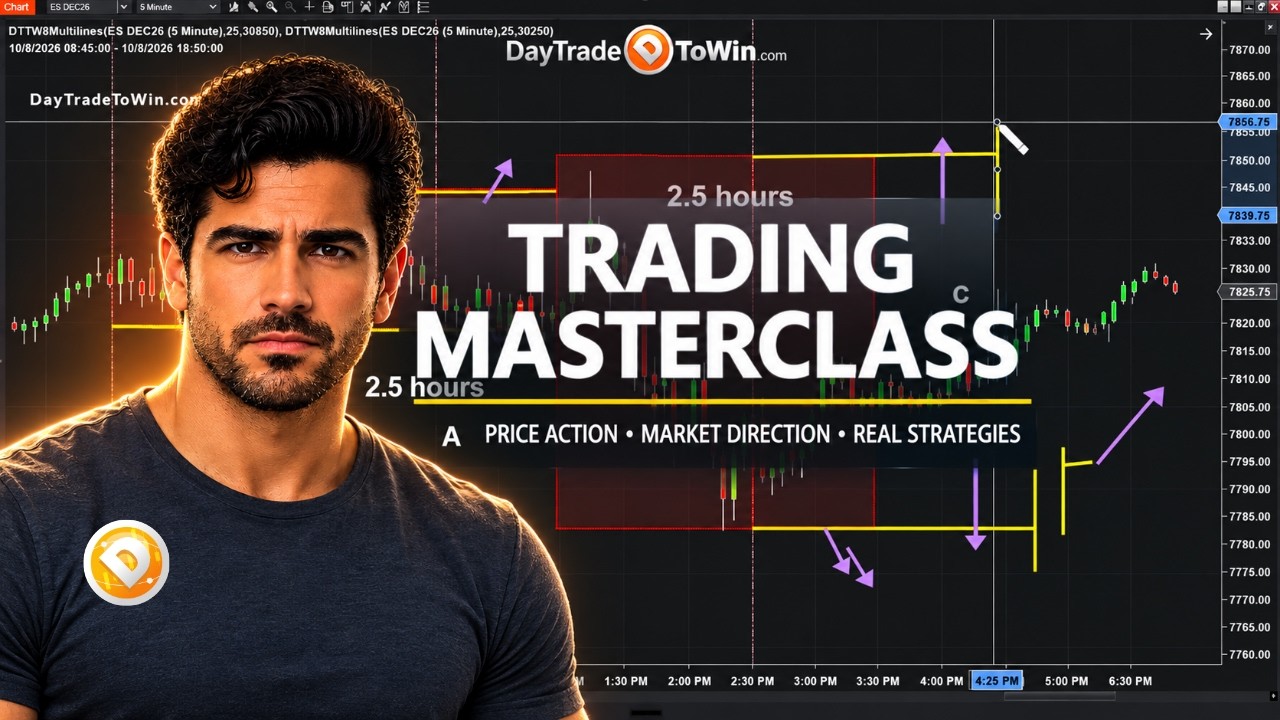
This trading method divides the regular trading session into three sections:
A: 9:30 AM–12:00 PM Eastern — Establish the morning trading range.
B: 12:00 PM–2:30 PM Eastern — Watch for breaks, retests, or reversals around the morning range.
C: 2:30 PM–4:00 PM Eastern — Look for continuation or reversal opportunities later in the trading day.
One of the most important rules explained in this class is waiting for TWO consecutive candles to close above or below an established trading range before considering a breakout entry.
Rather than chasing every move, learn to wait for confirmation.
FREE TRADING TOOLS
Get access to the free ABC Indicator through your DayTradeToWin member account.
Visit: https://daytradetowin.com/
We also offer price action trading education, trading indicators, automated trading software, and one-on-one mentorship for NinjaTrader and TradingView.
Explore our trading systems, including the Atlas Line, Sonic Trading System, Trade Scalper, At The Open, and Autopilot.
ABOUT DAYTRADETOWIN
DayTradeToWin specializes in price action trading education, helping traders understand market behavior through clearly defined strategies, chart-based examples, and practical trading rules.
Whether you’re a new trader or an experienced futures trader, this class will help you develop a more structured approach to analyzing the market.
Subscribe for additional day trading lessons, futures market analysis, price action strategies, and trading platform tutorials.
QUESTION FOR TRADERS:
Do you prefer trading trending markets or range-bound markets? Let us know in the comments.
#DayTrading #PriceActionTrading #TradingStrategy #FuturesTrading #NinjaTrader
*THE LINKS IN THIS DESCRIPTION ARE AFFILIATE LINKS. I DO BENEFIT FINANCIALLY WHEN YOU CLICK THESE LINKS AND SIGN UP WITH PARTNERS. THIS IS NOT FINANCIAL ADVICE. NEVER INVEST MORE THAN YOU’RE WILLING TO LOSE. DAY TRADING IS VERY DIFFICULT, AND THE PERFORMANCE SHOWN HERE ON YOUTUBE DOES NOT PORTRAY COMMON RESULTS.
None of the information contained herein constitutes a recommendation, promotion, offer, or solicitation of an offer to buy, sell or hold any security, financial product or instrument or to engage in any specific investment strategy. Investment involves risks. Investors should obtain their own independent financial advice and understand the risks associated with investment products and services before making investment decisions.